
Showing posts with label COMPUTER EBOOKS. Show all posts
Showing posts with label COMPUTER EBOOKS. Show all posts
Sunday, July 24, 2011
Fundamentals of Database Systems by Ramez Elmasri and Shamkant B. Navathe(free pdf)


Wednesday, July 20, 2011
An introduction to formal languages and automata
An Introduction to Formal Languages and Automata provides an excellent presentation of the material that is essential to an introductory theory of computation course. The text was designed to familiarize students with the foundations and principles of computer science and to strengthen the students' ability to carry out formal and rigorous mathematical argument. Employing a problem-solving approach, the text provides students insight into the course material by stressing intuitive motivation and illustration of ideas through straightforward explanations and solid mathematical proofs. By emphasizing a learning through problem solving, students learn the material primarily through problem-type illustrative examples that show the motivation behind the concepts, as well as their connection to the theorems and definitions
Wednesday, March 9, 2011
Database System Concepts Sixth Edition (power point presentation ppt)
CHAPTER DOWNLOAD LINK
1. Introduction download
2. Introduction to the Relational Model download
3. Introduction to SQL download
4. Intermediate SQL download
5. Advanced SQL download
6. Formal Relational Query Languages download
7. Database Design: The Entity-Relationship Approach download
8. Relational Database Design download
9. Application Design download
10. Storage and File Structure download
11. Indexing and Hashing download
12. Query Processing download
13. Query Optimization download
14. Transactions download
15. Concurrency Control download
16. Recovery System download
17. Database System Architectures download
18. Parallel Databases download
19. Distributed Databases download
20. Data Mining download
21. Information Retrieval download
22. Object-Based Databases download
23. XML download
Thursday, December 3, 2009
NetBeans: The Definitive Guide

Book Details
•Paperback: 672 pages
•Publisher: O’Reilly Media, Inc.; 1 edition (October 15, 2002)
•Language: English
•ISBN-10: 0596002807
•ISBN-13: 978-0596002800
Book Description
As the Java programming language has increased in both functionality and complexity, developers have demanded more of their program editors. Gone are the days when a simple visual editor is sufficient for even small programming projects. While there are numerous IDEs available today for use by Java developers, one stands above the rest, not only for its functionality, but for its extensibility: NetBeans. In NetBeans: The Definitive Guide, you’ll find out how to use this IDE to its fullest, making your Java programming more efficient and productive than ever before. You’ll understand the basics of the IDE, and quickly be utilizing the various editor and explorer windows. You’ll also master many of NetBeans advanced features, and be working with XML documents, CVS repositories, Javadoc trees, and web applications, all within the NetBeans framework. In addition to teaching you how to use the existing features of NetBeans, this work goes on to cover developing additional modules for NetBeans. Through this instructional portion of the book, you will master the NetBeans APIs, and learn how to enhance NetBeans for your own specific needs. Whether you need to add customized behavior to handle your proprietary file formats, or want to redistribute NetBeans as a proprietary product, NetBeans: The Definitive Guide will allow you to master this open source IDE and all of its advanced features. Whether you are an enterprise developer looking for an IDE that can handle your complex program tasks, an open source developer looking to integrate NetBeans into your own visual projects, or a manager trying to maximize your team’s development potential,NetBeans: The Definitive Guide is the book for you.
About the Author
is a native of Massachusetts who has worked in the IT industry as a developer, writer, graphic artist on and off since the age of twelve. Following a hiatus as a literary theory major and musician, he returned to the world of computers at the age of 23 in response to the marvelous career opportunities for a student of literature during a recession, and the clamour of the IT world for his return. In the spring of 1999, he moved to the Czech Republic to work for a small company called NetBeans, which was soon to be acquired by Sun Microsystems, where he still lives and works. Tim can be found at most times perched with an underpowered laptop, deep in ascetic concentration in his monastic quarters high in the towers of Sun Microsystems in Prague. He is occasionally led outside, blinking in the twilight, to belt out blues tunes in smoky bars, on the advice of his physicians and Sun Microsystems’ “Great Place to Work” program. has worked on NetBeans since January 1999 in several capacities, including developing NetBeans core software, editing API documentation, and providing assistance for integrators. He joined Sun with the acquisition of NetBeans in the fall of 1999. He has spoken twice at JavaOne on NetBeans module development. currently lives with his wife Nikki in Philadelphia PA, but is originally from the sunny island republic of Trinidad and Tobago. In the pursuit of money, education and all else that corrupts, he left his island paradise and currently works as a developer for Hewlett-Packard. Although he misses tropical breezes and an idyllic lifestyle, he enjoys being a software developer and the opportunity to work with interesting technical people like those on the NetBeans project. Besides technology, Simeon also enjoys poetry, classical literature, travel and underground hip-hop – of course. began his programming career in 1967 on the physically largest computer ever built, the SAGE system’s house-sized AN/FSQ-7. A freelance consultant since 1975, he worked with a wide range of computer hardware and languages, including several early personal computers before they were known as such. Vaughn currently writes technical articles about Sun ONE Studio and develops training materials for Sun

Monday, October 12, 2009
Data Communications And Networking_4edition By Behrouz Forouzan
Data Communications And Networking_4ed By Forouzan
munications and Networking, 4/e

——————————————————————————–
Behrouz A. Forouzan, DeAnza College
ISBN: 0072967757
Copyright year: 2007
Table of Contents
——————————————————————————–
PART 1
Overview
Chapter 1 Introduction
Chapter 2 Network Models
PART 2
Physical Layer and Media
Chapter 3 Data and Signals
Chapter 4 Digital Transmission
Chapter 5 Analog Transmission
Chapter 6 Bandwidth Utilization: Multiplexing and Spreading
Chapter 7 Transmission Media
Chapter 8 Switching
Chapter 9 Using Telephone and Cable Networks for Data Transmission
PART 3
Data Link Layer
Chapter 10 Error Detection and Correction
Chapter 11 Data Link Control
Chapter 12 Multiple Access
Chapter 13 Wired LANs: Ethernet
Chapter 14 Wireless LANs
Chapter 15 Connecting LANs, Backbone Networks, and Virtual LANs
Chapter 16 Wireless WANs: Cellular Telephone and Satellite Networks
Chapter 17 SONET/SDH
Chapter 18 Virtual-Circuit Networks: Frame Relay and ATM
PART 4
Network Layer
Chapter 19 Network Layer: Logical Addressing
Chapter 20 Network Layer: Internet Protocol
Chapter 21 Network Layer: Address Mapping, Error Reporting, and Multicasting
Chapter 22 Network Layer: Delivery, Forwarding, and Routing
PART 5
Transport Layer
Chapter 23 Process-to-Process Delivery: UDP, TCP, and SCTP
Chapter 24 Congestion Control and Quality of Service
PART 6
Application Layer
Chapter 25 Domain Name System
Chapter 26 Remote Logging, Electronic Mail, and File Transfer
Chapter 27 WWW and HTTP
Chapter 28 Network Management: SNMP
Chapter 29 Multimedia
PART 7
Security
Chapter 30 Cryptography
Chapter 31 Network Security
Chapter 32 Security in the Internet: IPSec, SSL/TLS, PGP, VPN, and Firewalls
Appendix A Unicode
Appendix B Numbering Systems
Appendix C Mathematical Review
Appendix D 8B/6T Code
Appendix E Telephone History
Appendix F Contact Addresses
Appendix G RFCs 1
Appendix H UDP and TCP Ports
Acronyms
Glossary
References
Index
******open the file with adobe in case no file extension is specified******.click on download button
munications and Networking, 4/e
——————————————————————————–
Behrouz A. Forouzan, DeAnza College
ISBN: 0072967757
Copyright year: 2007
Table of Contents
——————————————————————————–
PART 1
Overview
Chapter 1 Introduction
Chapter 2 Network Models
PART 2
Physical Layer and Media
Chapter 3 Data and Signals
Chapter 4 Digital Transmission
Chapter 5 Analog Transmission
Chapter 6 Bandwidth Utilization: Multiplexing and Spreading
Chapter 7 Transmission Media
Chapter 8 Switching
Chapter 9 Using Telephone and Cable Networks for Data Transmission
PART 3
Data Link Layer
Chapter 10 Error Detection and Correction
Chapter 11 Data Link Control
Chapter 12 Multiple Access
Chapter 13 Wired LANs: Ethernet
Chapter 14 Wireless LANs
Chapter 15 Connecting LANs, Backbone Networks, and Virtual LANs
Chapter 16 Wireless WANs: Cellular Telephone and Satellite Networks
Chapter 17 SONET/SDH
Chapter 18 Virtual-Circuit Networks: Frame Relay and ATM
PART 4
Network Layer
Chapter 19 Network Layer: Logical Addressing
Chapter 20 Network Layer: Internet Protocol
Chapter 21 Network Layer: Address Mapping, Error Reporting, and Multicasting
Chapter 22 Network Layer: Delivery, Forwarding, and Routing
PART 5
Transport Layer
Chapter 23 Process-to-Process Delivery: UDP, TCP, and SCTP
Chapter 24 Congestion Control and Quality of Service
PART 6
Application Layer
Chapter 25 Domain Name System
Chapter 26 Remote Logging, Electronic Mail, and File Transfer
Chapter 27 WWW and HTTP
Chapter 28 Network Management: SNMP
Chapter 29 Multimedia
PART 7
Security
Chapter 30 Cryptography
Chapter 31 Network Security
Chapter 32 Security in the Internet: IPSec, SSL/TLS, PGP, VPN, and Firewalls
Appendix A Unicode
Appendix B Numbering Systems
Appendix C Mathematical Review
Appendix D 8B/6T Code
Appendix E Telephone History
Appendix F Contact Addresses
Appendix G RFCs 1
Appendix H UDP and TCP Ports
Acronyms
Glossary
References
Index
******open the file with adobe in case no file extension is specified******.click on download button
Wednesday, August 5, 2009

Sunday, July 26, 2009
The Art Of Assembly Language
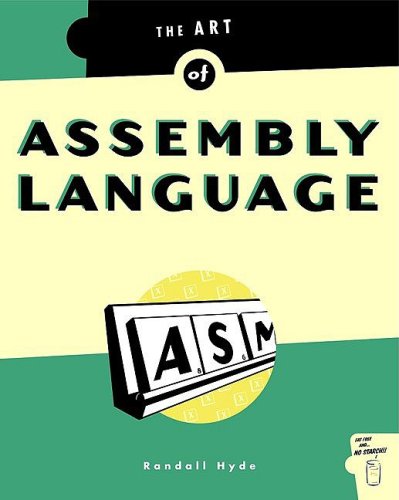
The Art of Assembly Language Programming, Randy Hyde's acclaimed text on assembly language programming, is the most-often recommended book on 80x86 assembly language programming in newsgroups, on web sites, and by word of mouth. The author presents assembly language from the high-level programmer's point of view, so you can start writing meaningful programs within days.
The Art of Computer Virus Research and Defense
The Art of Computer Virus Research and Defense

"The Art of Computer Virus Research and Defense" by Peter Szor
Publisher: Addison-Wesley Professional | Feb 13 2005 | ISBN: 0321304543 | CHM | 13.48 Mb | 744 Pages
Peter Szor takes you behind the scenes of anti-virus research, showing howthey are analyzed, how they spread, and--most importantly--how to effectivelydefend against them. This book offers an encyclopedic treatment of thecomputer virus, including: a history of computer viruses, virus behavior,classification, protection strategies, anti-virus and worm-blocking techniques,and how to conduct an accurate threat analysis. The Art of Computer VirusResearch and Defense entertains readers with its look at anti-virus research, butmore importantly it truly arms them in the fight against computer viruses.As one of the lead researchers behind Norton AntiVirus, the most popularantivirus program in the industry, Peter Szor studies viruses every day. Byshowing how viruses really work, this book will help security professionals andstudents protect against them, recognize them, and analyze and limit thedamage they can do

Monday, June 15, 2009
Software Engineering A Practitioners Approach McGraw-Hill Series by ROGER S. PRESSMAN
Software Engineering A Practitioners Approach McGraw-Hill Series
-ROGER S. PRESSMAN

http://www.4shared.com/get/-R7f4SZn/Software_Engineering_-_A_Pract.html
-ROGER S. PRESSMAN
http://www.4shared.com/get/-R7f4SZn/Software_Engineering_-_A_Pract.html
Thursday, June 11, 2009


Java 2 Complete Reference
Java 2 Complete Reference

COMPLETE REFERENCE| PDF | 5,07MB
DESCRIPTION:
This book is most famous and useful book of Java.
Name of the book -Java 2 Complete Reference
Author - Herbert Schildt
Edition - Fifth
Format - PDF
Pages - 1184

Subscribe to:
Posts (Atom)